

How Window Treatments Shape the Mood of a Room
Light is often the first element we notice in a room, yet rarely the one we consciously design. Window treatments quietly take on that role, shaping how a space feels from morning to evening—whether open and airy or soft and enclosed.
At their most functional, blinds and drapery manage brightness and privacy. Their real value, however, lies in the atmosphere they create. Sheer curtains diffuse harsh daylight into something gentle and ambient, softening the room and creating a sense of calm. Structured blinds, on the other hand, bring precision. Their clean lines and controlled light introduce a more tailored, architectural mood.
Layering adds depth and flexibility. Pairing natural woven shades with flowing drapery allows a space to evolve throughout the day. Morning light feels filtered and organic, while evenings become more intimate, wrapped in texture and quiet.
Material choice further defines the experience. Linen offers an effortless softness, while heavier fabrics introduce depth and insulation—both visual and physical. Even subtle details, like a matte finish versus a slight sheen, can influence whether a space feels relaxed or refined.
Window treatments are not simply about covering a window. They frame how light enters, how a room holds warmth, and how it transitions between moments. When thoughtfully considered, they do not draw attention to themselves. Instead, they allow the entire space to feel composed, intentional, and quietly complete.
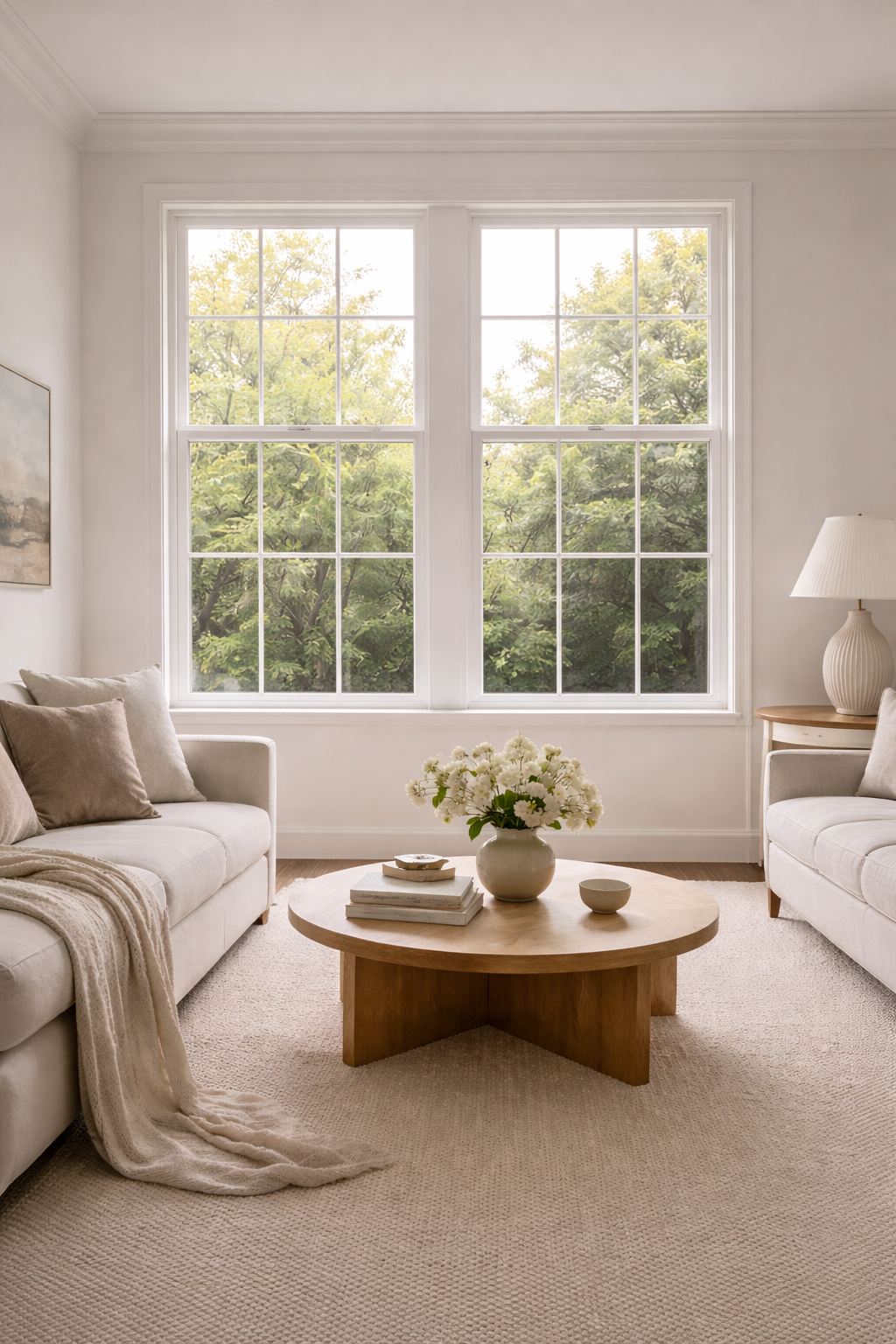
Before: Without Window Treatments
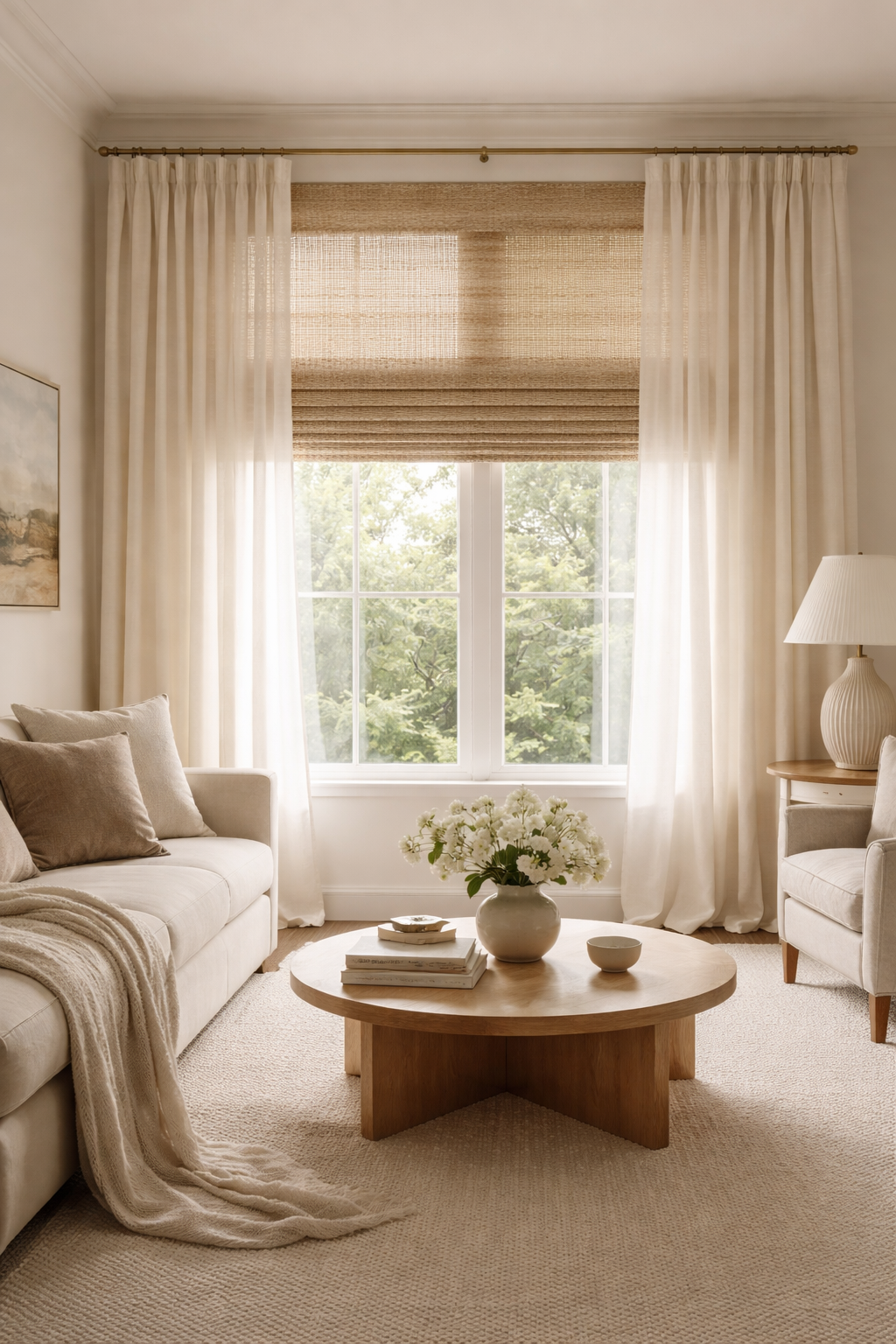
After: Thoughtfully Layered for Comfort and Light
